
How Middletown Residents Surface
A search for a Middletown resident works best as a short chain, not a hunt for one master list. Begin with the least intrusive clue. An address belongs first in the City of Middletown property systems. A name may belong in MyVote, a court index, a business filing, a directory, or a vital-record index, depending on the reason for the search. Each source answers a narrow question, and each has a different rule for access.
The public trail also has clear gaps. An assessor card usually speaks about an owner of record, not every person in a dwelling. A voter lookup is a status and polling-place route, not a household list. A city directory may name only a head of household, a business, or an institution. Search the source that fits the clue, write down the date and spelling used, then compare the result with another keeper.
- Start with Vision or the city GIS when an address, parcel, owner, account, map-lot, or PID is known.
- Use the Connecticut Secretary of the State MyVote route or Middletown Registrars for a single registration-status question.
- Check the Superior Court party index, Probate Court, or a business and license portal when the clue points to a case, estate, entity, or credential.
- Use the Town Clerk and RecordHub for recorded instruments, then use Russell Library or Wesleyan for older people and address trails.
- Ask the responsible office for a specific record when the online layer ends, using the Connecticut Freedom of Information Act where it applies.
The Offices Behind Middletown Directories
Middletown is the Middlesex County seat, but Connecticut has no active county recorder or county clerk layer for ordinary land recording. The local Town Clerk holds the land-record counter and town filings. The Assessor maintains current assessment information, the Registrars administer local voter registration, and state courts and agencies hold the court and vital systems. That split matters because a search for a generic “Middlesex County Recorder” sends a researcher away from the actual custodian.
The Middletown government hub is a useful starting point for department names, boards, commissions, agendas, and minutes. A staff or board entry can identify a public official or civic participant, but it is not a complete resident directory. The cards below point to the record keepers most often used in a local search.
Middletown Town Clerk
245 deKoven Drive
Middletown, CT 06457
860-638-4910
Town Clerk and land records
Middletown Registrars
245 deKoven Drive, Room B15
Middletown, CT 06457
860-638-4950
Voter registration office
Here is the Middletown government hub source captured for the office trail.
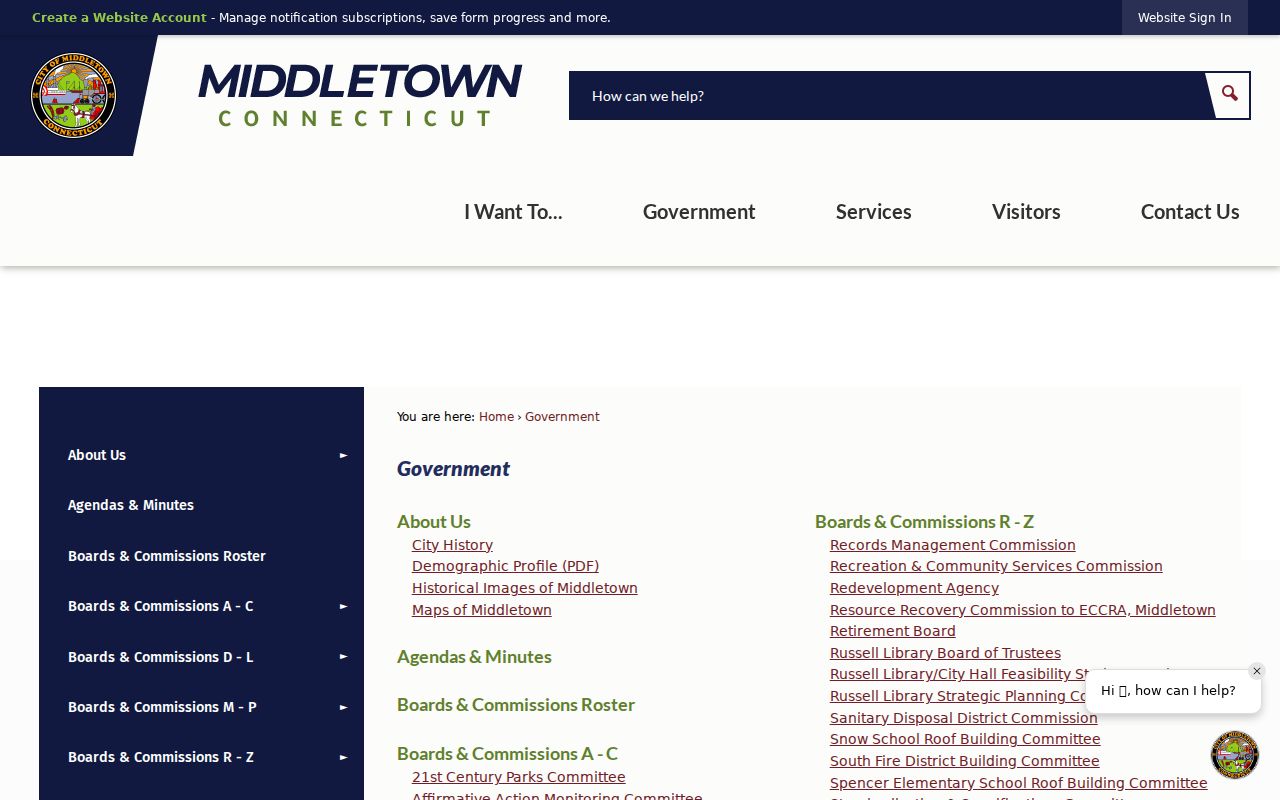
The government hub image shows the citywide starting point, while the office details above identify the custodians that answer specific record questions.
Current Middletown Resident Directories
Current records do not all mean the same thing. Property data is strongest for the record owner and parcel. MyVote is designed for an individual status or polling-place check. The court index shows a public case trail when a name appears in a covered category. Staff and board rosters show civic roles. Together they make a practical residents directory, but the columns below should not be read as proof that every person named lives at a particular address.
| Source | People or record | Keeper | Access |
|---|---|---|---|
| Vision property card | Owner of record and parcel clues | City Assessor | Public lookup |
| GIS parcel layer | Owners, addresses, PIDs, districts | City GIS | Public map and table |
| MyVote lookup | Registration status and polling place | Connecticut SOTS and local Registrars | Single-person route |
| Deed index | Grantors, grantees, instruments | Town Clerk / RecordHub | Index from 1969 online |
| Staff and board rosters | Named civic officials and participants | City government | Current postings |
A result is more useful when its role is named. A parcel card can lead to a deed. A registration result can support a civic-status check. A board roster can supply a name and date for an archive search. For a one-person chain, the detailed Middletown resident lookup route keeps those uses separate.
Middletown Property Search Fields
The Vision Property Lookup is the clearest current entry point when the clue is a parcel. Its mode selector accepts an address, owner name, account number, map-lot, PID, or an all-fields search. Address suggestions need at least three characters in the inspected implementation. Owner, account, PID, and All modes need at least one character. Map-Lot uses two text boxes, one for map and one for lot.
Use the card as a record-owner and building source. It may show owner and co-owner, location, owner mailing address, account, map-lot, PID, market and appraisal values, building characteristics, land use, sale-history columns, and links to a field card or map. The City Assessor describes the result as the most recent owner and building information. An owner address can be out of town, belong to an entity, or differ from the parcel location.
| Field | Type | Required | Useful Middletown clue |
|---|---|---|---|
| Address | Autocomplete text | No | Street number, name, or partial address |
| Owner | Autocomplete text | No | Last name or entity name |
| Acct# | Autocomplete text | No | Property account bridge |
| Map-Lot | Two text boxes | No | Map and lot identity |
| PID | Autocomplete text | No | GIS/CAMA parcel identifier |
| All | Combined text search | No | Broad portal search |
The Assessor office page also explains the October 1 to September 30 assessment year and the January 31 grand-list finalization. The page warns that ownership information in GIS may not be current, so a card is a lead to verify with the Town Clerk or Assessor.
Here is the Middletown Assessor source captured for the property trail.
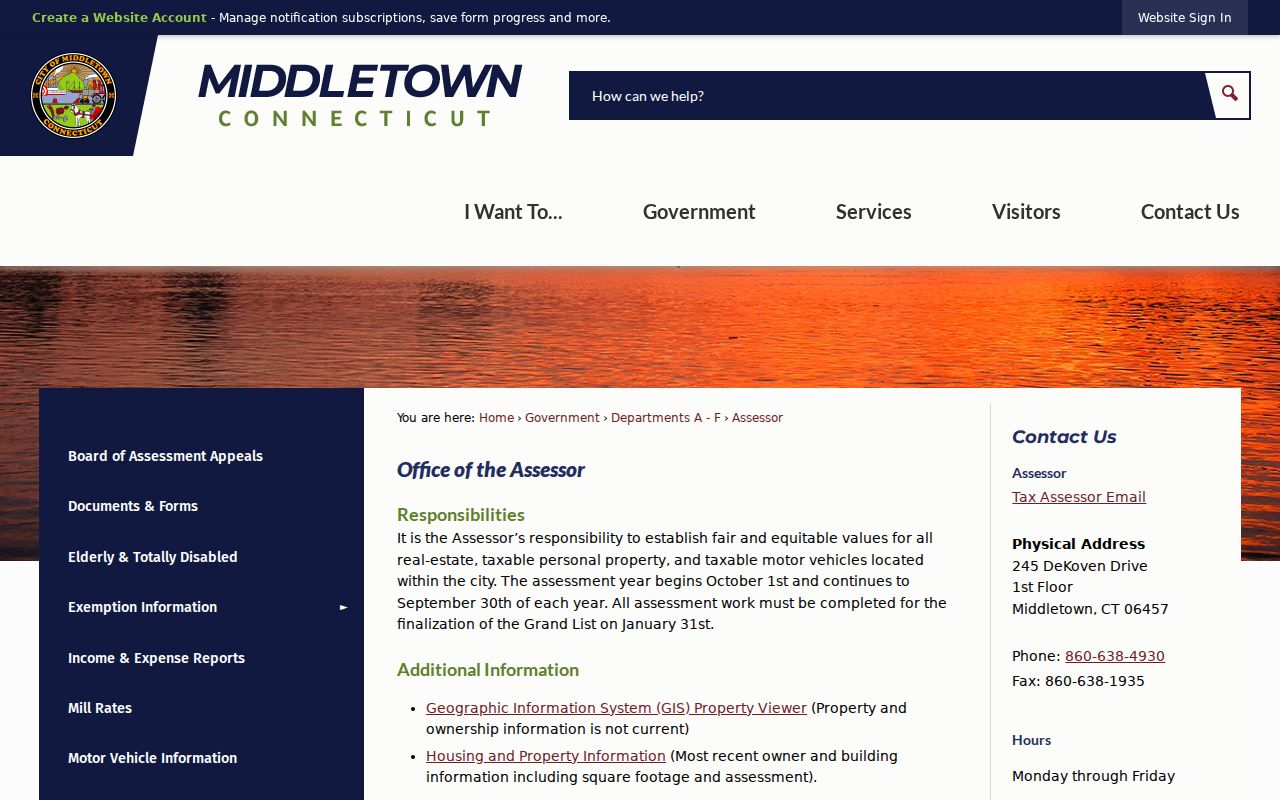
The image shows why assessment duties and resident questions overlap without becoming the same thing: the office values property, while the card identifies a record owner and parcel.
Middletown GIS Parcel Trail
The City of Middletown GIS application turns a single property clue into a spatial record chain. Its search placeholder names Address, Owner, Account Number, PID, and Map-Lot. The parcel feature service exposes Parcel_ID, Map, Lot, StreetAddr, owner and owner-address fields, SITE_ZIP and OWN_ZIP, book and page leads, values, sale data, year built, use code, zoning, building areas, units, stories, and other property attributes.
Turn on Parcels, Parcel Labels, roads, zoning, voting districts, flood areas, utility districts, and other layers only when they answer the question at hand. The Attribute Table can show 25, 50, 100, or 1,000 rows and can export CSV. GIS also includes an Abutters tool that creates a distance-based mailing list for nearby parcels. It does not create a list of every person at an address.
- Parcel
- A mapped property unit with a public identifier, such as a PID or map-lot, used to join GIS and assessment records.
- Index
- A finding aid that points to a record, party, date, or document. It is not always the image or certified copy.
- Roll
- A list kept for a defined purpose, such as assessment or voter registration, with its own fields and limits.
- Criss-cross directory
- A historical reverse directory that starts with a street address and points to an occupant, business, or household entry.
Use the official Middletown parcel feature service when a table or field value needs a direct source. The map is informational, and city map materials identify older public exports as accurate up to 1996, so legal proof belongs with the Town Clerk.
Middletown Voter Status Route
The Connecticut MyVote lookup is for an individual registration and polling-place question. Middletown Registrars at 245 deKoven Drive, Room B15, handle local registration and correction work. The public system is dynamic, and its purpose is not to browse a whole street. Connecticut law describes public registry information such as a name, former name, residence or former address, voting district, and party, but protected and program-suppressed records must remain protected.
Only the birth year is public under the current rule, not the month and day. Participation history means whether and how a person took part in an election, not the candidate or ballot choice. A full voter file is a separate CSV request with a $300 fee and purpose limits under Conn. Gen. Stat. § 9-50d and related state rules. The local route is safer for one status question: use MyVote, then ask the Registrars to correct a record that appears wrong.
Note: A voter record can support a registration question, but it cannot prove that every member of a household lives at the address.
Middletown Court Name Search
The Connecticut Superior Court, Middlesex Judicial District, supplies the public trial-court name trail for Middletown. Its party search requires a last name and accepts an optional first name. Location, case category, case type, and sort controls are populated by the portal. Name modes include Starts With, Contains, Is Equal To, and Sounds Like. Other tabs cover docket number, attorney or firm, property address, short calendar, court events, and legal notices.
A result may show case name and type, docket number, file and return dates, disposition and date, judge, party roles, appearances, juris number, self-represented status, and an address or phone field when the public display includes it. It is not a complete case file. Sealed, erased, juvenile, youthful-offender, adoption, and protected family material may not appear. The Middlesex clerk at One Court Street is the fallback for a file, certified copy, or a public terminal search.
Middletown Vital Records Route
Middletown Vital Statistics at 245 deKoven Drive issues local birth, death, and marriage copies and handles burial and genealogy questions. The Connecticut Department of Public Health Office of Vital Records maintains the statewide system from July 1, 1897 forward, while local registrars retain local copies. The local office lists 860-638-4960 and accepts the forms and payment routes described by the custodian.
Birth access is the key limit. Connecticut General Statutes § 7-51a makes birth records confidential for 100 years. Births after January 1, 2003 may be requested from any Connecticut town or the state, while older requests require an eligible requester and qualifying connection. State birth copies are listed at $30. Certified marriage and death copies are generally available to adults with the required form, identification, and payment, with state fees listed at $20. Divorce records are court files, not DPH vital records.
Here is the state vital-record structure source used to separate local and statewide routes.
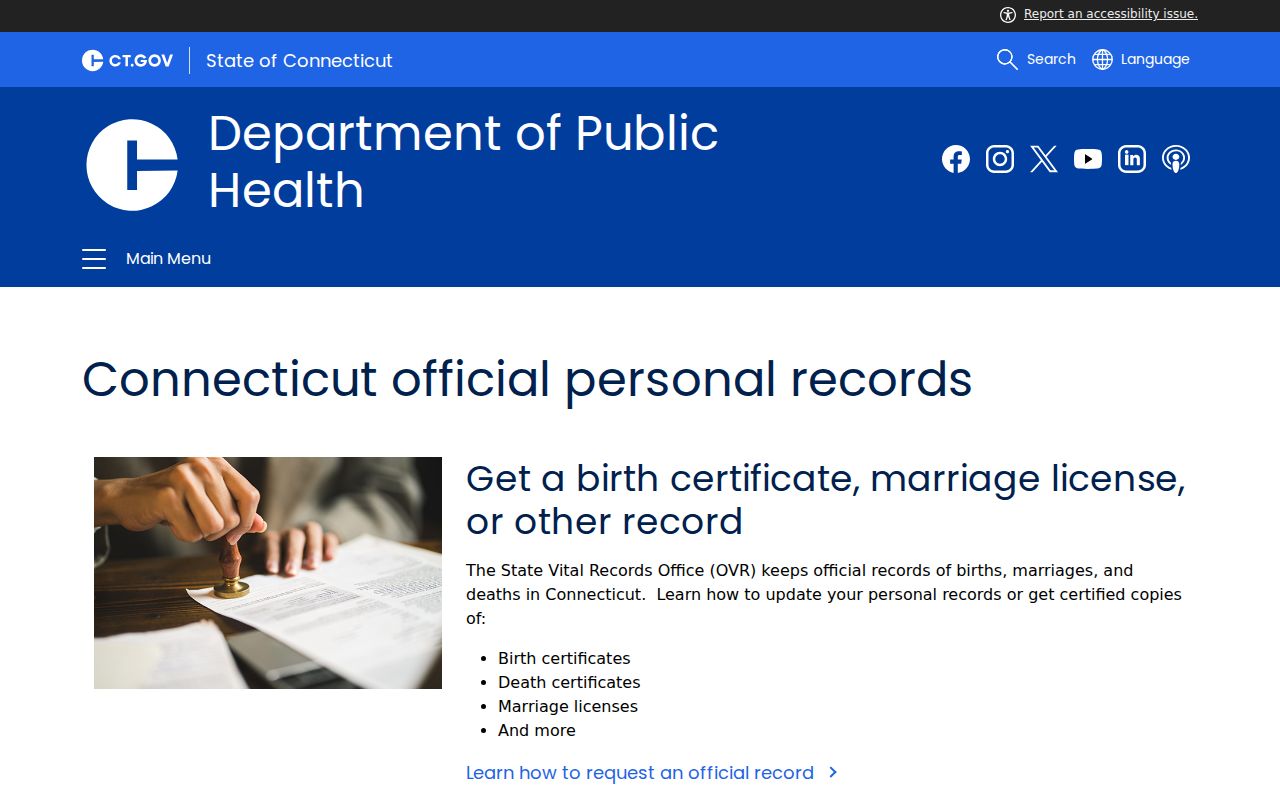
The local and state offices form a route, not one open database. Historical indexes can supply a lead, but the custodian decides whether a certified copy may be released.
Middletown Deed Index Trail
The Middletown land-record layer starts with the Town Clerk and the RecordHub search site. The city states that the online index and images reach from January 1, 1969 to the present. The guest/no-subscription route can expose index information, while images may require pay-to-print or a subscription product. A deed-index result can show party names and roles, instrument kind, file or recording date, description, document number, book and page, reference, amount, and an image indicator.
For a current property clue, search the Vision owner as a grantee, open the likely purchase instrument, note the grantor and legal description, then search that grantor as an earlier grantee. Book/page, map-lot, PID, and legal description help when an old street number changes. Russell Library reports deed microfilm from 1654 to 1907 and an early grantor-grantee and vital index from 1654 to 1855. Those older books are an in-person or reference-service route, not an implied extension of the web index.
Property records establish title and recorded parties. They do not by themselves tell who occupied a house. Directories, census, vital records, newspapers, permits, and probate supply the human context.
Here is the Middletown Town Clerk source captured for the deed and filing route.
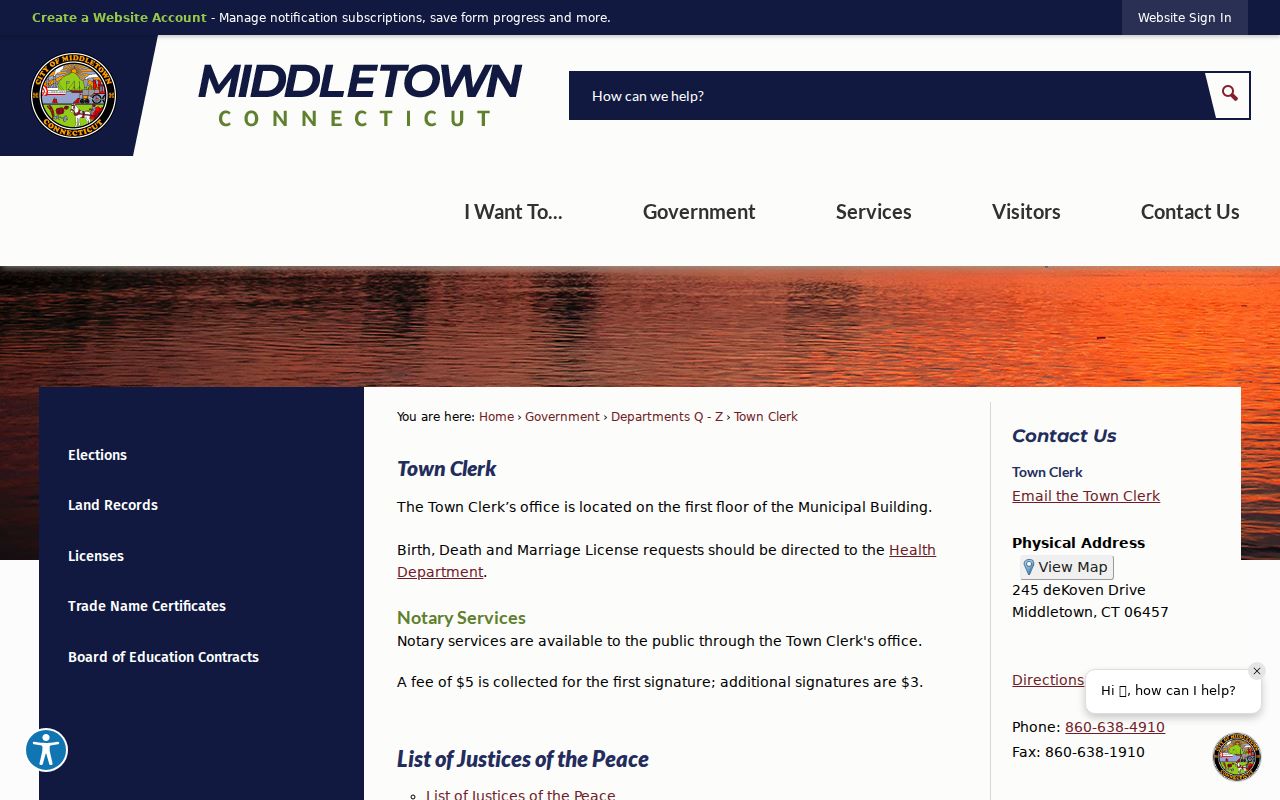
The Town Clerk remains the local place to ask for a record when a portal result is not enough or an older volume must be checked.
Historical Middletown Resident Directories
Historical directories are the strongest substitute for a past residents directory. The city’s directory page links scans for 1875, 1884 through 1886, 1900 through 1910, 1915, 1919, 1925, 1930, 1935, 1941, 1945, 1950, 1960, 1965, 1970, 1975, 1978, 1981, and 1990, with gaps. Russell Library describes a broader 1871 through 1990 shelf, also with gaps. Wesleyan adds a 1868 through 1927 Special Collections run and 1928 through 1980 volumes in stacks.
An older entry may pair a name with a spouse or relationship, occupation, address, owner or renter mark, business affiliation, church or club role, and an advertisement. The reverse section starts with a street address and may point to an occupant or business. Read the abbreviation key first. A missing year can mean a collection gap, a publisher change, a temporary listing, or a move. The Middletown city directory collections page keeps the year runs and reading method together.
Russell’s newspaper indexes and microfilm help fill the space between directory years. The Middletown Press and Penny Press indexes are digitized through the Connecticut Digital Archive, while library shelves retain broader title runs and local context.
Here is the official Middletown history source that anchors the town, city, and county-seat timeline.
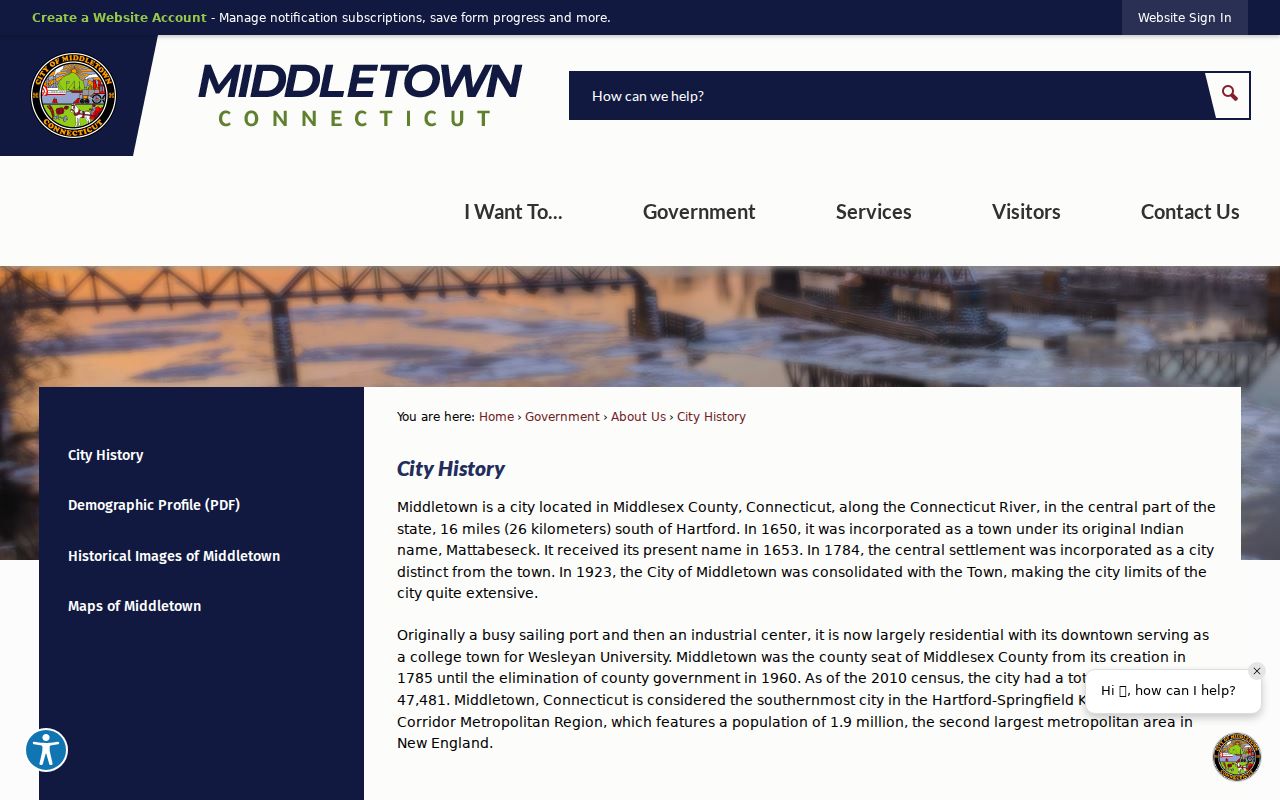
Middletown’s identity changed from Mattabeseck settlement to town, city, and consolidated government, so old records must be read in their own civic setting.
Middletown Address Layers Explained
One address can carry several labels. A situs address is the physical parcel location used by GIS, permits, building records, and a property card. An owner mailing address is where tax notices go. A legal description uses map-lot, PID, lot, or metes-and-bounds language in the deed. A historical directory address is the publisher’s spelling and number. A ZIP is a delivery geography. These fields can differ without any one of them being a mistake.
GIS separates SITE_ADDR, SITE_CITY, SITE_ZIP from OWN_ADDR1, OWN_CITY, OWN_STATE, and OWN_ZIP. Vision places the property location and owner address in separate parts of the card. A business, trust, estate, or out-of-town owner can make the mailing address especially different from the parcel. Use the legal description and PID when an old street label will not match a current search.
Middletown also has two locally used ZIPs in the authoritative material checked: 06457 for ordinary city addresses and the Silver Street post-office route, and 06459 for institutional and campus patterns including Wesleyan. Neither ZIP should be treated as a city boundary.
Middletown Records After the Portal
Online access is only one channel. The Town Clerk, Assessor, Registrars, courthouse clerk, Vital Statistics desk, Russell Library, Wesleyan collections, Middlesex County Historical Society, and Godfrey Memorial Library each cover a different part of the record trail. Russell’s Middletown Room at 123 Broad Street works by appointment and can identify a directory year, obituary index, deed reel, census item, map, cemetery source, or newspaper title. MCHS at 151 Main Street requires an appointment, lists a $10 nonmember daily fee, and offers paid remote research.
Middletown launched JustFOIA for electronic requests and tracking in March 2025. The Connecticut Freedom of Information Act governs many public records, but it does not make every personal, court, vital, or protected record open. A specific request should name the department, record type, date range, address, map-lot, PID, or docket number. Ask the responsible office whether a copy, inspection, or certified route is available.
Here is the Connecticut FOI source captured for the public-request path.
The FOI framework is a request path, not a promise that a city archive contains a complete resident roster.
Special Middletown Record Trails
Some people appear through a role rather than a home address. Probate can lead to a fiduciary, estate, will, or heir file. The Secretary of the State business search can show an entity, ALEI, principal, registered agent, formation date, and filing history. Connecticut eLicense can show a credential type, number, status, effective and expiration dates, scope, or supervisor. A principal, agent, or license address is an affiliation or mailing clue, not automatic proof of residence.
For custody information, the Connecticut Department of Correction is the statewide route, and DESPP maintains the sex-offender registry. A local Middletown police record check is narrower and concerns Middletown Police Department arrests. These sources have different purposes and fields, so a person’s presence in one does not confirm a current address in another.
Here is the Connecticut DESPP registry explanation used to distinguish a searchable registry from a general resident roll.
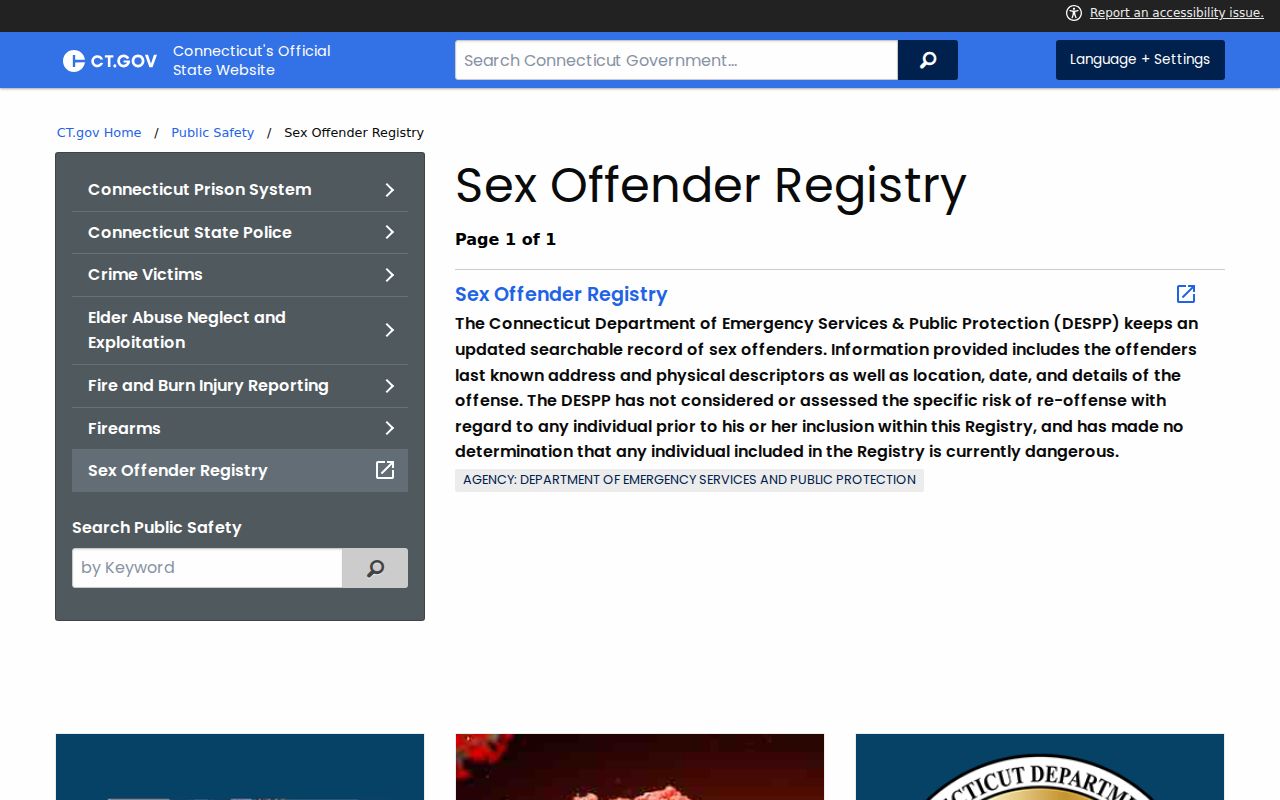
The official explanation keeps the registry’s scope and disclaimer attached to any result rather than treating it as a general people list.
Protecting Middletown Records
Public access has boundaries. Connecticut’s Address Confidentiality Program gives qualifying relocated survivors a substitute address and suppresses the actual residence from covered state and local records. Voter-file requests have statutory purpose limits. DMV address information is restricted under the federal Driver’s Privacy Protection Act. Birth, court, and family records can carry their own eligibility or sealing rules. A missing address must not be filled in from a different source.
Use records for lawful personal research, family history, civic understanding, estate work, or checking a possible scam. Do not use a public roll to stalk, harass, intimidate, or harm anyone. When an assessor, land, voter, or business field is wrong, contact the custodian. The Assessor, Town Clerk, Registrars, and the Connecticut Attorney General’s Privacy and Data Security office each have different correction routes.
Lawful use. A public Middletown record is not a license to track a person. Keep a search tied to a lawful purpose, avoid republishing protected details, and confirm an important fact with the office that holds it.
Here is the Connecticut Address Confidentiality Program source used for the protection rules.
The substitute-address program is a reminder that a careful residents directory must preserve privacy exceptions instead of trying to defeat them.