
How Middletown Residents Surface
Skip the idea of one master list. A Middletown resident lookup works better as a short chain of small answers. Start with the least intrusive clue you have. An address belongs in the City of Middletown property systems first. A name might fit MyVote, a court index, a business filing, a directory, or a vital-record index. It depends on why you are searching. Each source answers one narrow question. Each also carries its own access rule.
The gaps matter just as much. An assessor card names an owner of record, not everyone under the roof. A voter lookup confirms status and a polling place, not a household. A city directory may list only a head of household, a business, or an institution. Pick the source that fits your clue. Note the date and spelling it uses. Then check the result against another keeper's records.
- Start with Vision or the city GIS when an address, parcel, owner, account, map-lot, or PID is known.
- Use the Connecticut Secretary of the State MyVote route or Middletown Registrars for a single registration-status question.
- Check the Superior Court party index, Probate Court, or a business and license portal when the clue points to a case, estate, entity, or credential.
- Use the Town Clerk and RecordHub for recorded instruments, then use Russell Library or Wesleyan for older people and address trails.
- Ask the responsible office for a specific record when the online layer ends, using the Connecticut Freedom of Information Act where it applies.
The Offices Behind Middletown Directories
Middletown serves as the Middlesex County seat. Yet Connecticut has no working county recorder for everyday land recording. The Town Clerk runs the land-record counter and town filings. The Assessor keeps current assessment data. The Registrars handle local voter rolls. State courts and agencies control the court and vital systems. This split trips up many people. A hunt for a generic Middlesex County Recorder leads away from the real custodian every time.
The Middletown government hub helps with department names, boards, commissions, agendas, and minutes. A staff or board entry can identify a public official or civic participant. It is not a full resident directory, though. The cards ahead point to the record keepers a local search uses most.
Middletown Town Clerk
245 deKoven Drive
Middletown, CT 06457
860-638-4910
Town Clerk and land records
Middletown Registrars
245 deKoven Drive, Room B15
Middletown, CT 06457
860-638-4950
Voter registration office
Here is the Middletown government hub source captured for the office trail.
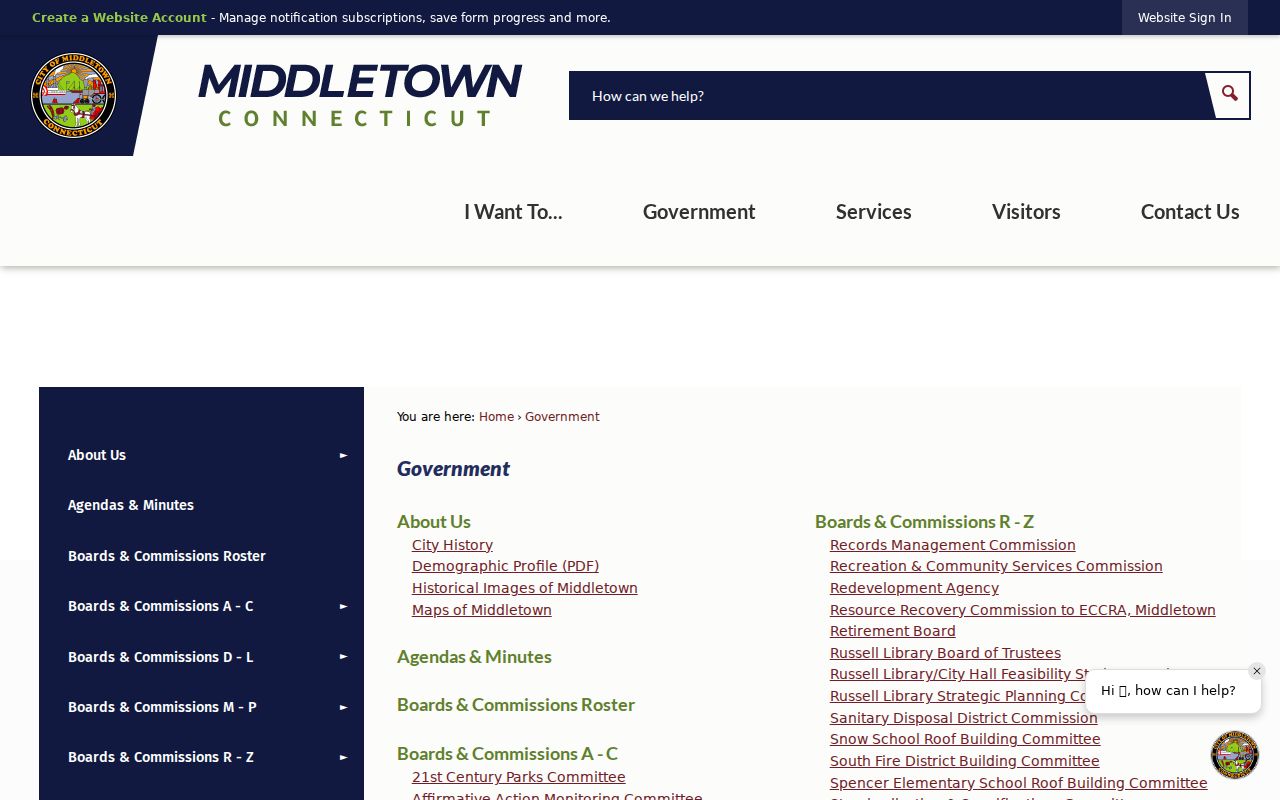
The government hub image marks the citywide starting point. The office details above name the custodians for each specific record question.
Current Middletown Resident Directories
Current records each carry a different meaning. Property data is strongest for the record owner and the parcel. MyVote serves an individual status or polling-place check. The court index traces a public case trail when a name falls in a covered category. Staff and board rosters show civic roles. Woven together, they form a practical residents directory. The columns below still do not prove that every person named lives at any particular address.
| Source | People or record | Keeper | Access |
|---|---|---|---|
| Vision property card | Owner of record and parcel clues | City Assessor | Public lookup |
| GIS parcel layer | Owners, addresses, PIDs, districts | City GIS | Public map and table |
| MyVote lookup | Registration status and polling place | Connecticut SOTS and local Registrars | Single-person route |
| Deed index | Grantors, grantees, instruments | Town Clerk / RecordHub | Index from 1969 online |
| Staff and board rosters | Named civic officials and participants | City government | Current postings |
Naming a result's role makes it useful. A parcel card can lead to a deed. A registration result can back a civic-status check. A board roster can hand you a name and date for an archive dig. For a one-person chain, the detailed Middletown resident lookup route keeps each use in its lane.
Middletown Property Search Fields
When the clue is a parcel, the Vision Property Lookup helps. It is the clearest current way in. Its mode selector takes an address, owner name, account number, map-lot, PID, or an all-fields search. Address suggestions require at least three characters. Owner, account, PID, and All modes each need one character at minimum. Map-Lot mode uses two text boxes, one for map and one for lot.
Treat the card as a record-owner and building source. It may show owner and co-owner, location, owner mailing address, account, map-lot, PID, market and appraisal values, building characteristics, land use, and sale-history columns. It also links to a field card or map. The City Assessor calls it the most recent owner and building information. An owner address can sit out of town or belong to an entity. It may also differ from the parcel location.
| Field | Type | Required | Useful Middletown clue |
|---|---|---|---|
| Address | Autocomplete text | No | Street number, name, or partial address |
| Owner | Autocomplete text | No | Last name or entity name |
| Acct# | Autocomplete text | No | Property account bridge |
| Map-Lot | Two text boxes | No | Map and lot identity |
| PID | Autocomplete text | No | GIS/CAMA parcel identifier |
| All | Combined text search | No | Broad portal search |
The Assessor office page also lays out the assessment year, October 1 through September 30, with the grand list finalized January 31. It warns that GIS ownership data may lag, so treat any card as a lead. Verify it with the Town Clerk or the Assessor before relying on it.
Here is the Middletown Assessor source for the property trail.
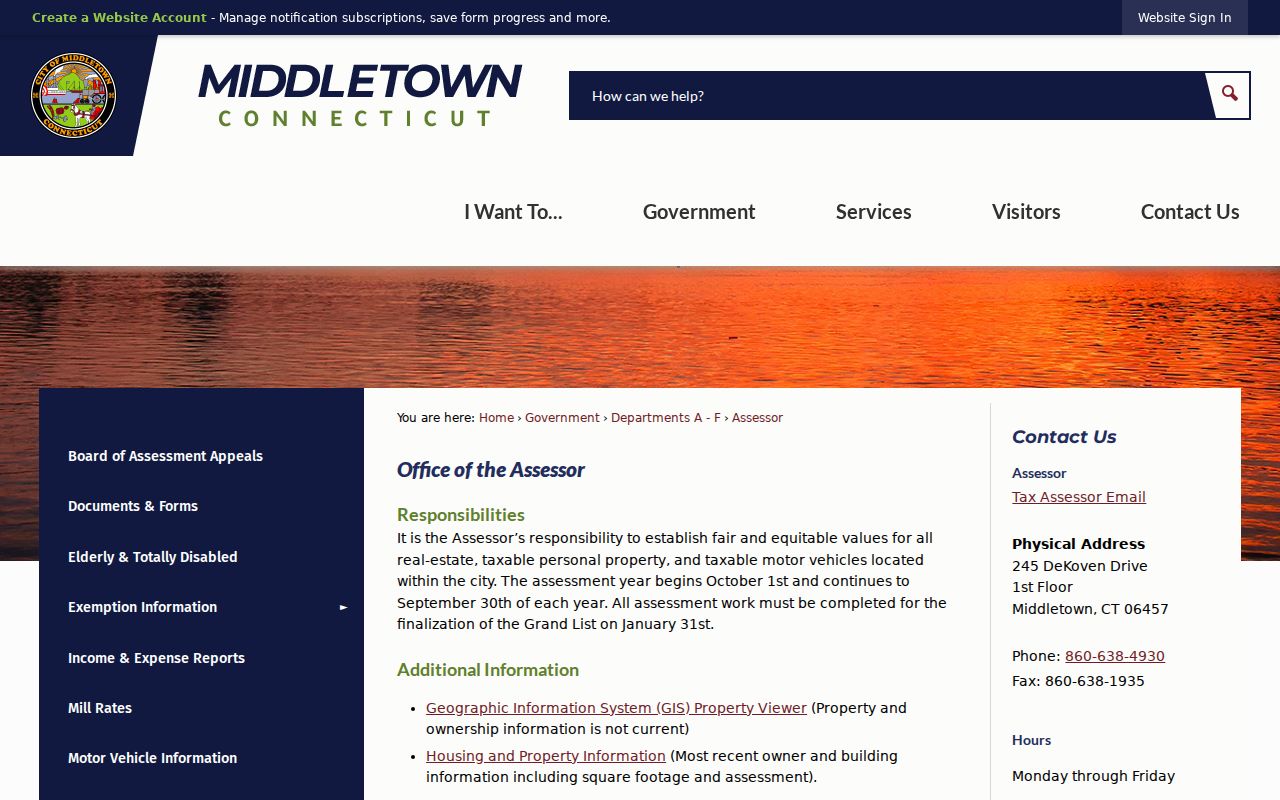
The image shows why assessment duties and resident questions overlap without merging. The office values property, while the card identifies a record owner and parcel.
Middletown GIS Parcel Trail
Middletown's GIS application turns one property clue into a spatial record chain. The search box accepts an address, owner, account number, PID, or map-lot. Behind each parcel sits a feature service loaded with fields. It carries Parcel_ID, Map, Lot, StreetAddr, owner and owner-address, SITE_ZIP and OWN_ZIP, book and page leads. It also holds values, sale data, year built, use code, zoning, building areas, units, and stories. For a Middletown residents directory built from property rolls, that depth is hard to beat.
Layers answer specific questions. Turn on Parcels, Parcel Labels, roads, zoning, voting districts, flood areas, or utility districts only when they serve the task at hand. The Attribute Table can display 25, 50, 100, or 1,000 rows and exports to CSV. An Abutters tool builds a distance-based mailing list for nearby parcels. It will not list every person at an address.
- Parcel
- A mapped property unit with a public identifier, such as a PID or map-lot, used to join GIS and assessment records.
- Index
- A finding aid that points to a record, party, date, or document. It is not always the image or certified copy.
- Roll
- A list kept for a defined purpose, such as assessment or voter registration, with its own fields and limits.
- Criss-cross directory
- A historical reverse directory that starts with a street address and points to an occupant, business, or household entry.
Cite the official Middletown parcel feature service whenever a table or field value needs a direct source. The map itself is informational only, and city map materials identify older public exports as accurate up to 1996. Legal proof of ownership belongs with the Town Clerk.
Middletown Voter Status Route
The Connecticut MyVote lookup answers one person's registration and polling-place question. Middletown Registrars at 245 deKoven Drive, Room B15, handle local registration and corrections. The system is dynamic. It exists for individual status, not for browsing a whole street. A voter-roll trail differs from a residents directory in that respect.
Connecticut law makes registry information public. It includes name, former name, residence or former address, voting district, and party. Protected and program-suppressed records stay protected. Only the birth year is public under the current rule, never the month and day. Participation history shows whether and how a person voted. It does not show which candidate or ballot choice they made.
A full voter file is a separate CSV request. It carries a $300 fee and purpose limits under Conn. Gen. Stat. § 9-50d and related state rules. For a single status question, the local route is simpler. Check MyVote, then ask the Registrars to correct anything that looks wrong.
Note: A voter record can support a registration question, but it cannot prove that every member of a household lives at the address.
Middletown Court Name Search
Middletown's public trial-court name trail runs through the Connecticut Superior Court, Middlesex Judicial District. Its party search requires a last name and takes an optional first name. Location, case category, case type, and sort controls come pre-populated by the portal. Name modes include Starts With, Contains, Is Equal To, and Sounds Like. Other tabs open more paths. Docket number, attorney, and firm tabs are there. Property address, short calendar, court events, and legal notices are covered too.
A result may show case name and type, docket number, file and return dates, disposition and date, judge, party roles, appearances, juris number, and self-represented status. An address or phone field appears when included. It is not the full case file. Sealed, erased, juvenile, youthful-offender, adoption, and protected family material may not appear. Need a file, certified copy, or public terminal search? The Middlesex clerk at One Court Street is the fallback.
Middletown Vital Records Route
Middletown Vital Statistics at 245 deKoven Drive issues local birth, death, and marriage copies. It also handles burial and genealogy questions. The Connecticut Department of Public Health Office of Vital Records keeps the statewide system from July 1, 1897 forward. Local registrars retain local copies. The local office lists 860-638-4960 and accepts the forms and payment routes the custodian describes.
Birth access is the key limit. Connecticut General Statutes § 7-51a keeps birth records confidential for 100 years. Births after January 1, 2003 may be requested from any Connecticut town or the state. Older requests require an eligible requester and a qualifying connection. State birth copies are listed at $30. Certified marriage and death copies are generally available to adults. The required form, identification, and payment apply. State fees are listed at $20. Divorce records are court files, not DPH vital records.
The state vital-record structure source separates the local and statewide routes.
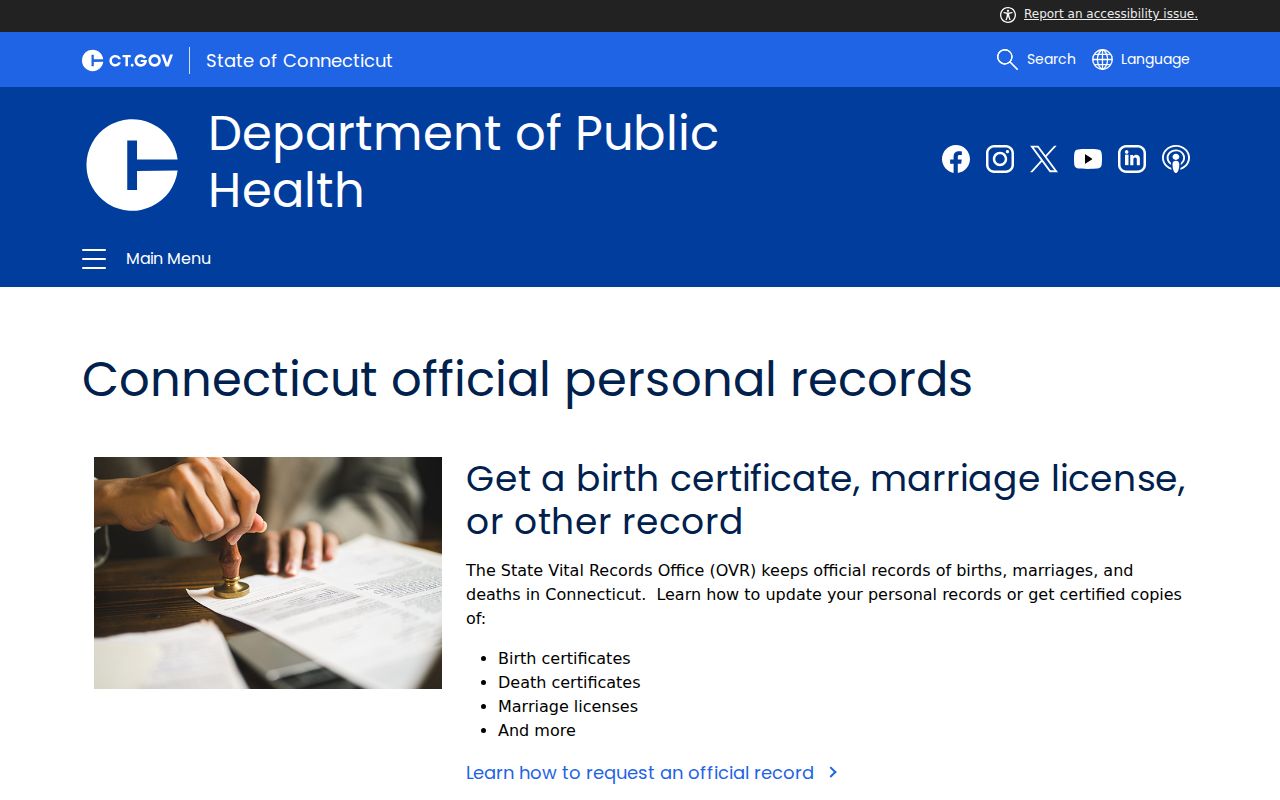
Vital records in Middletown move along a route rather than sitting in one open database. A residents directory or historical index can hand you a name and a date. But the custodian of the record decides whether a certified copy may be released.
Middletown Deed Index Trail
Land records in Middletown begin at the Town Clerk. The office feeds its records into the RecordHub search site, where the index and page images run from January 1, 1969 forward. Guest visitors can often read index lines without paying. Images, though, may sit behind pay-to-print or a subscription product. A deed entry can carry party names and roles, the instrument type, recording date, description, document number, book and page, reference, amount, and an image flag.
One walkable trick unrolls a property's past. Search the Vision owner as a grantee first. Open the likely purchase instrument, note the grantor and the legal description, then treat that grantor as an earlier grantee and keep walking the chain back. Book and page, map-lot, PID, and the legal description rescue you when an old street number changed. Russell Library holds deed microfilm from 1654 to 1907 and an early grantor-grantee and vital index covering 1654 to 1855. Those older volumes are an in-person or reference-service route. They do not stretch the web index further.
Deeds prove title and name recorded parties. They do not show who lived in a house. Directories, census, vital records, newspapers, permits, and probate supply that human context.
The Middletown Town Clerk page anchors the deed and filing route.
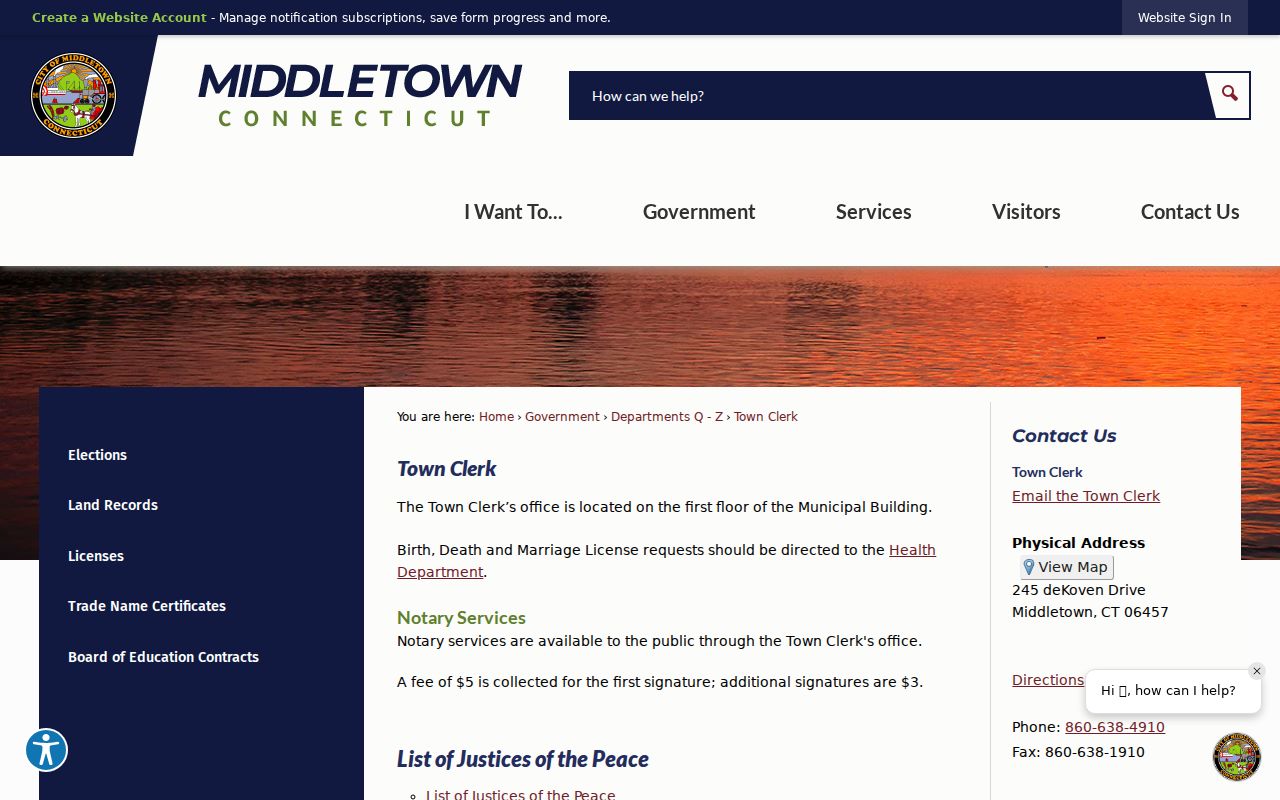
A portal answer is not always enough. The Town Clerk remains the local counter to ask when an older volume must be checked or a record needs explaining.
Historical Middletown Resident Directories
Old directories substitute well for a past residents directory. Scanned volumes on the city's history page cover 1875, 1884 through 1886, 1900 through 1910, 1915, 1919, 1925, 1930, 1935, 1941, 1945, 1950, 1960, 1965, 1970, 1975, 1978, 1981, and 1990, with gaps. Russell Library describes a wider shelf, 1871 through 1990. Wesleyan adds a Special Collections run from 1868 to 1927 plus 1928 through 1980 volumes in stacks.
A single entry can be surprisingly rich. It may pair a name with a spouse or relationship, occupation, address, owner or renter mark, business tie, church role, club office, even an advertisement. The reverse section flips the view. It starts with a street address and names the occupant or business there. Read the abbreviation key first. A missing year can reflect a collection gap, a publisher change, a temporary listing, or a move. The Middletown city directory collections page gathers the year runs and the reading method in one place.
Newspapers bridge the years between directories. Russell's indexes for the Middletown Press and Penny Press are digitized through the Connecticut Digital Archive. Broader title runs sit on the shelves.
Middletown grew from the Mattabeseck settlement into a town, then a city, then a consolidated government. The official Middletown history source anchors that civic timeline.
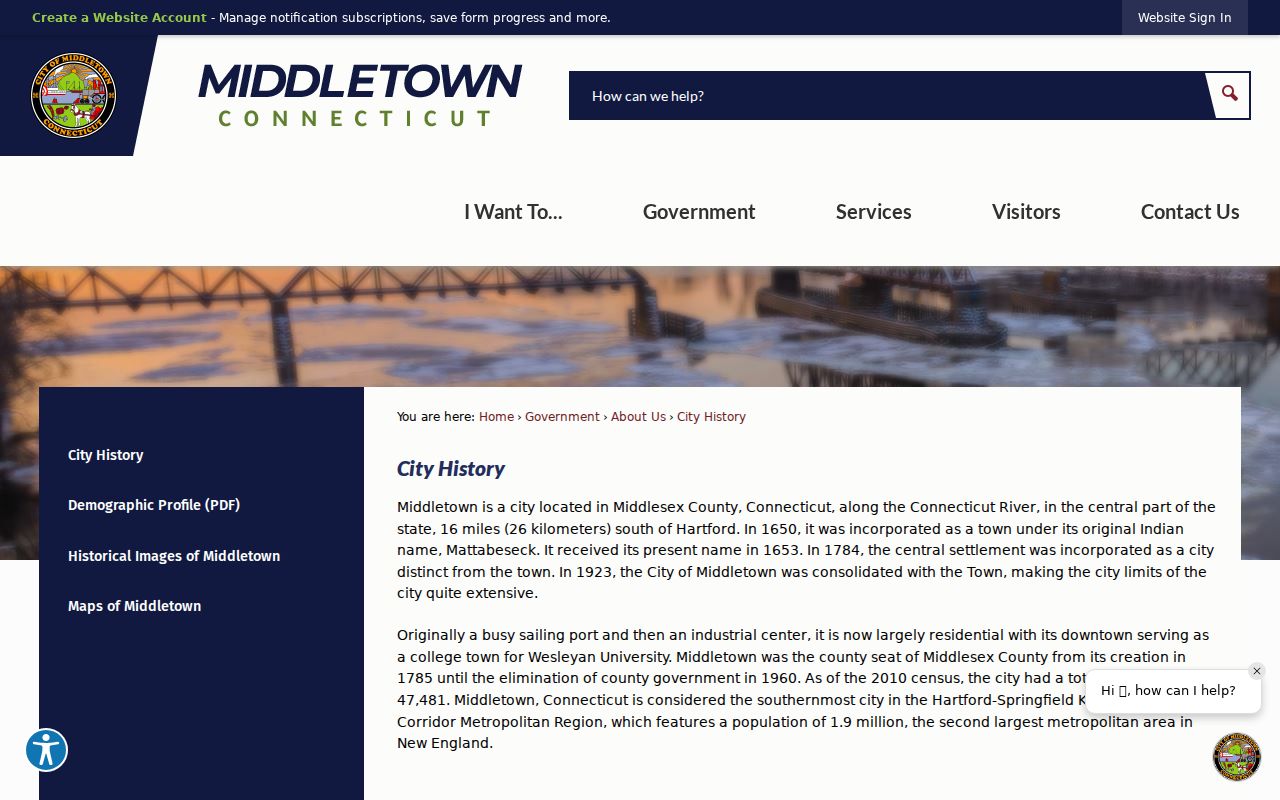
Old records belong to their own civic era. Read each entry against the government that created it, since Middletown shifted from settlement to town to city.
Middletown Address Layers Explained
One Middletown address can wear several hats. A situs address points to the physical parcel. That is the spot that GIS layers, permits, building records, and the property card all hang on. An owner mailing address is simply where tax notices travel. The legal description lives in the deed and speaks in map-lot, PID, or metes-and-bounds terms. Historical directories add their own spelling and numbering. A ZIP, meanwhile, is a delivery geography and nothing more. None of these fields has to agree. A mismatch is not automatically a mistake.
The GIS layer keeps SITE_ADDR, SITE_CITY, and SITE_ZIP apart from OWN_ADDR1, OWN_CITY, OWN_STATE, and OWN_ZIP. Vision's property card likewise splits the parcel location from the owner's mailing address. Trusts, estates, businesses, and out-of-town owners widen that gap even further. When an old street label refuses to match a current search, fall back on the legal description and the PID.
Middletown works with two local ZIPs. The first is 06457 for ordinary city addresses along with the Silver Street post-office route. The second is 06459 for institutional and campus patterns, Wesleyan included. Neither ZIP marks a true city boundary.
Middletown Records After the Portal
The portal is only one channel. Middletown's record trail spreads across the Town Clerk, Assessor, Registrars, courthouse clerk, Vital Statistics desk, Russell Library, Wesleyan collections, Middlesex County Historical Society, and Godfrey Memorial Library. Each covers a different slice. Russell's Middletown Room sits at 123 Broad Street. It works by appointment and can pin down a directory year, obituary index, deed reel, census item, map, cemetery source, or newspaper title. MCHS at 151 Main Street requires an appointment, lists a $10 nonmember daily fee, and offers paid remote research.
In March 2025 the city launched JustFOIA for electronic requests and tracking. The Connecticut FOI Act governs many public records. Personal, court, vital, and protected records stay closed. A good request names the department, record type, date range, address, map-lot, PID, or docket number. Ask which route fits: copy, inspection, or certified.
The Connecticut FOI source anchors the public-request path.
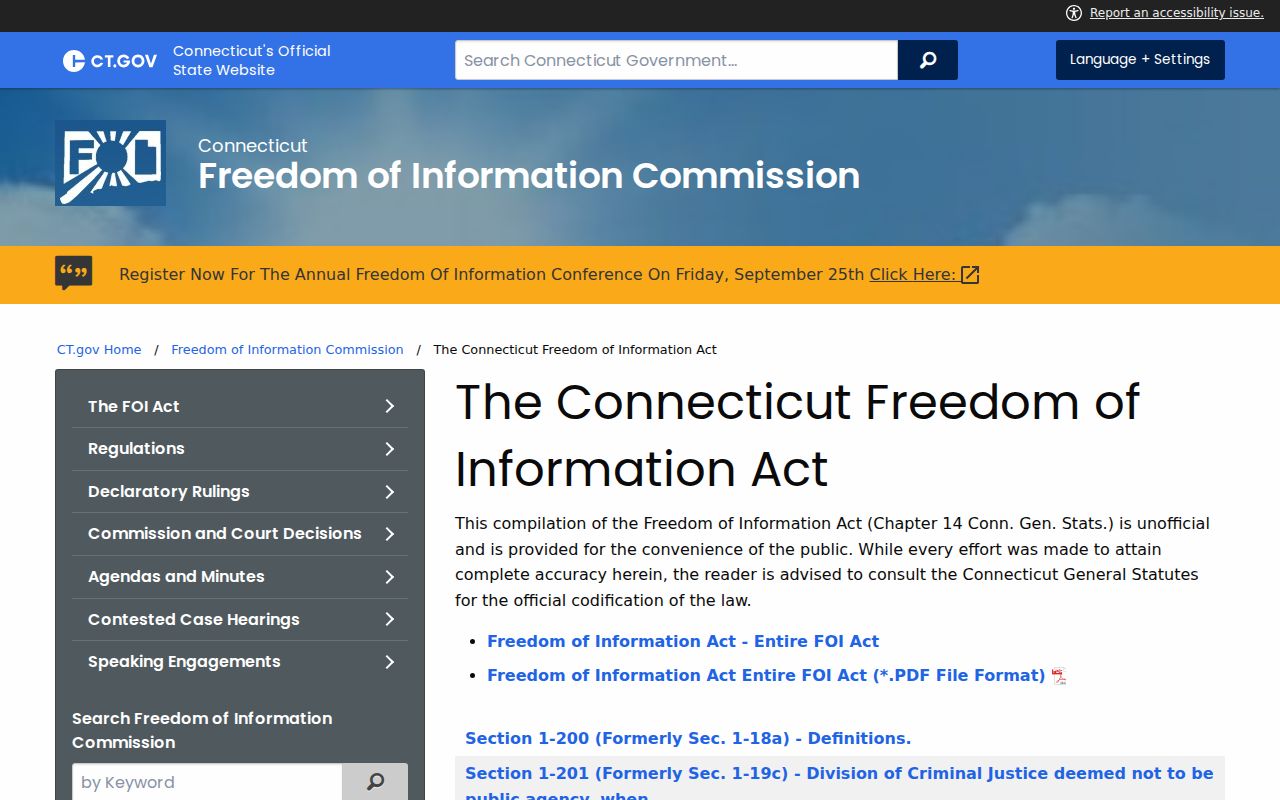
FOI opens a request path, not a full roster. No city archive here is obliged to hold a complete resident list of Middletown.
Special Middletown Record Trails
Not every trail starts with a street address. Probate files can surface a fiduciary, an estate, a will, or an heir. A role can open a different door. The Secretary of the State business search lists an entity and its ALEI. It also names principals, registered agent, formation date, and complete filing history. Connecticut eLicense is just as rich. It reports a credential type, license number, status, and effective and expiration dates. It also lists scope and any supervisor. Treat those addresses with care, though. A principal, agent, or license address is a mailing or affiliation clue. It is not proof that someone lives in Middletown.
Custody questions run through the Connecticut Department of Correction statewide. DESPP maintains the sex-offender registry separately. A Middletown Police Department record check is narrower still and covers only local arrests. Each system collects different fields for different purposes. A hit in one source never confirms a current address in another. The Connecticut DESPP registry explanation helps distinguish that searchable registry from a general resident roll.
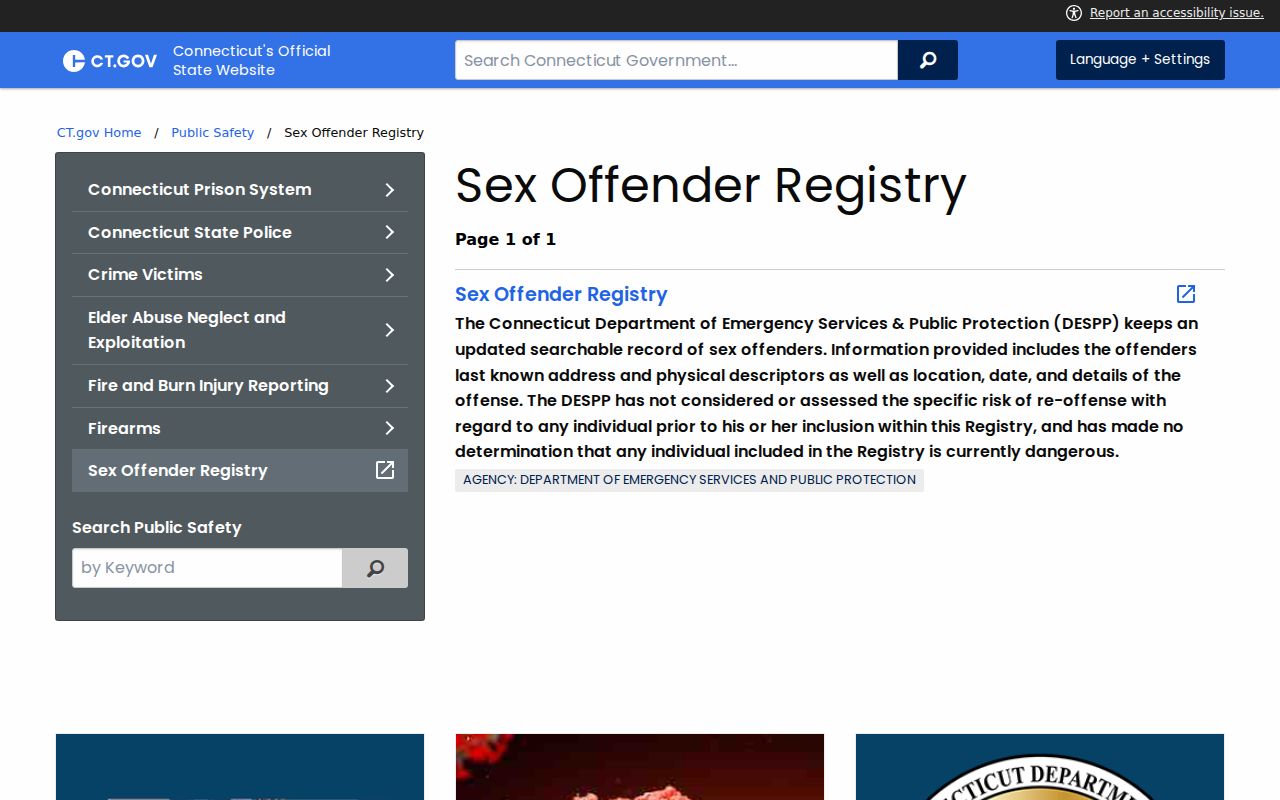
That framing matters. The official explanation keeps the registry's scope statement and disclaimer tied to every result, so it never reads like a general resident roll for Middletown.
Protecting Middletown Records
Access stops at a line. Connecticut's Address Confidentiality Program gives qualifying relocated survivors a substitute address. The real home stays hidden in covered records. Voter-file requests carry statutory purpose limits. Federal law, through the Driver's Privacy Protection Act, restricts DMV address information. Birth, court, and family records may add their own eligibility rules or sealing. Never backfill a missing address from another source.
Lawful uses are broad. A Middletown residents directory serves family history, civic research, estate work, and scam checks. It must never fuel stalking, harassment, intimidation, or harm. When an assessor, land, voter, or business field is wrong, contact the custodian, because the Assessor, Town Clerk, Registrars, and the Connecticut Attorney General's Privacy and Data Security office each handle corrections differently.
Lawful use. A public Middletown record is not a license to track a person. Keep a search tied to a lawful purpose, avoid republishing protected details, and confirm an important fact with the office that holds it.
Here is the Connecticut Address Confidentiality Program source used for the protection rules.
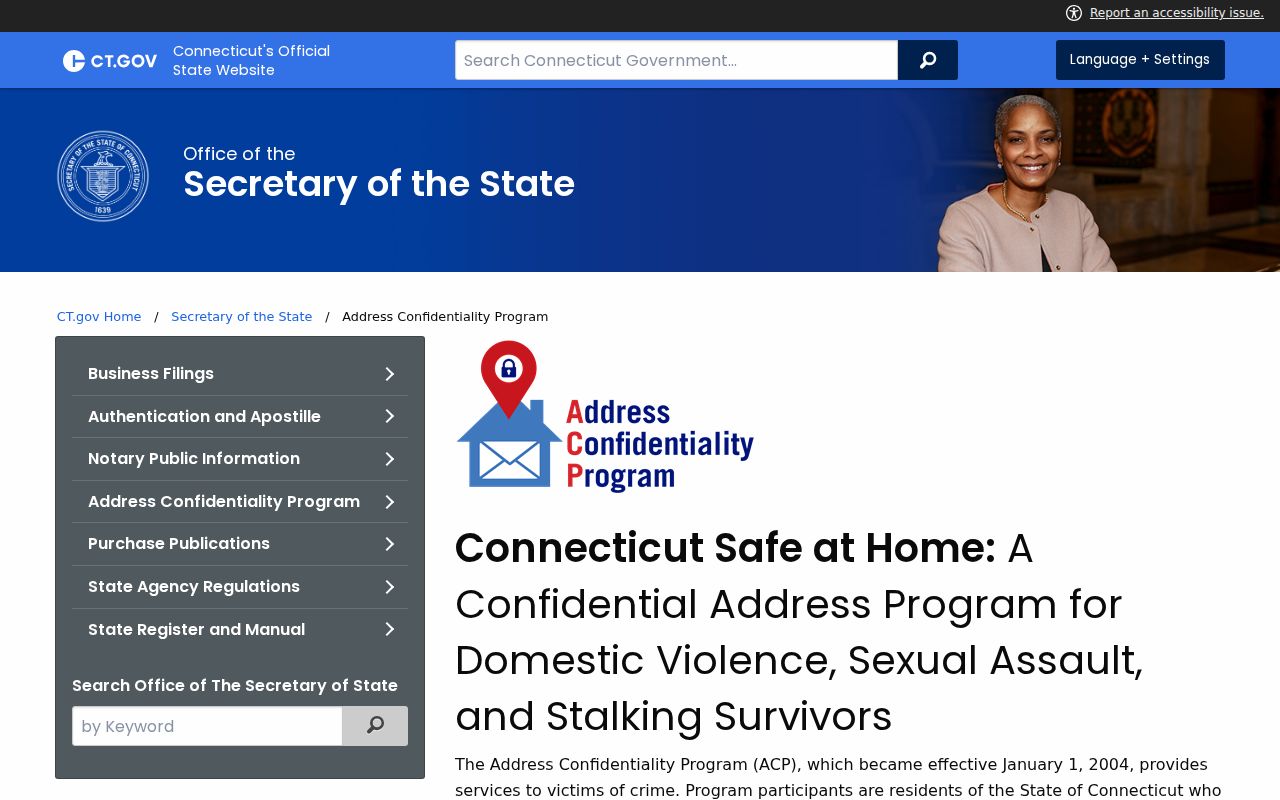
That program sets the standard. An honest residents directory has to preserve privacy exceptions like this one, not hunt for ways around them.